
Prediction of Length of Stay in Hospitals
FAIR 1 Archive Notice
This page describes research activities and results from the FAIR 2019-2023 program period.
The content is retained for reference purposes and is no longer actively maintained. Information on this page, including research outputs, team members, contact details, collaborations and links, may be incomplete or outdated.
No direct successor use case has been defined within the FAIR 2024-2028 program. Please consult the current FAIR use cases for related research activities.
Use Case Description
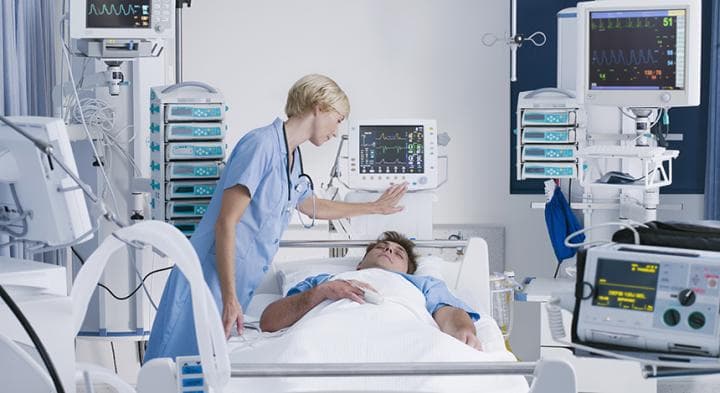
Healthcare costs are increasing worldwide. According to some estimates, healthcare costs could exceed 20% of several countries' gross domestic product (GDP) by 2050. Non-optimal use of medical resources is considered as one of the reasons for this. Length-of-Stay (LoS) is an important parameter for hospital planning and management tools, with respect to hospital admissions for diagnosis, planning of surgery and all related logistics. Optimal length-of-stay can alleviate the strain on existing resources and can augment the quality of care at the same time by for e.g. reducing waiting time for patients. Optimized patient flow can improve patient satisfaction and decrease costs.
The research within the Flanders AI Research Program
Our aim is to develop AI-based tools for prediction of the Length-of-Stay taking into account the specific condition of the patients and the evolution thereof. Different challenges are investigated:
Defining patient specific domains for handling the heterogeneity in the patient population.
Handling heterogeneous patient data taking into account a vast number of patient features and their interactions.
Dynamic tools updating the patient's LoS prediction in real-time as new laboratory tests, or measurements etc. become available.
Results
In our lastest work, "Understanding Deep Learning for Length of Stay prediction via Latent space visualization", we showed the superiority of sequence-to-sequence deep learning methods over static machine learning models for the continuous prediction of hourly remaining ICU (Intensive Care Units) LoS. We compared four state of the art deep learning architectures to static models and showed that the former models reduce the prediction error by almost 3 days compared to the best performing static model. Moreover, after applying dimensionality reduction on models' latent spaces we observed that with only the first 6 hours of patient data, the models are able to learn the clinical patterns that cluster patients into short and long stays and then into short, medium and long stays with 11 hours of data. This is very important in a real-hospital setting where, with very early and limited recorded data, long stays (i.e., patients at high risk of dying) can be identified and given more attention to.
In other recent work, titled "Client Recruitment for Federated Learning in ICU Length of Stay Prediction", which has been recognized with the Best Paper Award at the IEEE AI4Health (eScience) conference, we introduce a new client recruitment method aimed at improving the efficiency and privacy of federated learning (FL) in the healthcare sector, specifically focusing on Length of Stay (LoS) prediction in Intensive Care Units (ICUs).
Accurately predicting LoS requires a vast amount of data, however, aggregating medical data for the purpose of model training is particularly difficult due to privacy restrictions. FL alleviates these challenges by allowing to learn models across different institutions without the need for direct local access to the data. In the traditional FL setting, all hospitals contribute to the federation, even though the privacy risk is reduced, all data is still prone to leakage as FL does not provide a full privacy guarantee. In addition, participation by all clients can significantly slow the training procedure and introduce data of low quality in the federation, which in turn harms the training procedure.
In this work, we propose a strategic approach to client recruitment. By considering factors such as local target distribution divergence, local sample size, and training accelerators, a subset of participants from over 180 hospitals is recruited. By doing so, approximately 45 of the most representative hospitals end up participating in the federation. This provides a full privacy guarantee for the remaining hospitals as their data is simply not used. This reduction in participants also translates to increased efficiency (by a factor of 4), all whilst predictive performance remains on par or better compared to standard FL models or models trained on centrally aggregated data.
All details can be found in the paper at IEEE Xplore
PhD Researchers
Lyse Naomi Wamba Momo (KULeuven-STADIUS)
Vincent Scheltjens (KULeuven-STADIUS)
Basic Use Case Information
Period
2019-2023
Contact
Contact Person: Bart De Moor (KULeuven-STADIUS)
Research group: KULeuven-STADIUS / UGent IDLab
In collaboration with UZ LEUVEN (Frank Rademakers)