
Optimization of adhesive bonding Processes
FAIR 1 Archive Notice
This page describes research activities and results from the FAIR 2019-2023 program period.
The content is retained for reference purposes and is no longer actively maintained. Information on this page, including research outputs, team members, contact details, collaborations and links, may be incomplete or outdated.
No direct successor use case has been defined within the FAIR 2024-2028 program. Please consult the current FAIR use cases for related research activities.
Use Case Description
Goal of the use case
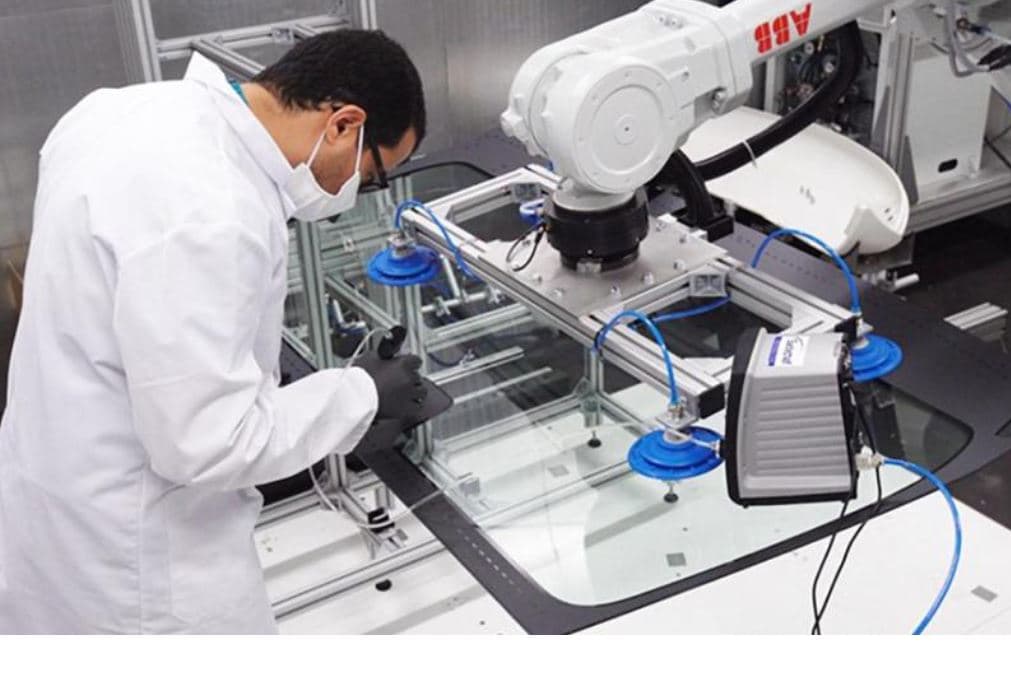
To meet markets demands for products featuring enhanced characteristics, increasing environmental awareness and more restrictive emission norms, the product designs are getting more and more complex. Novel materials are being used such as aluminum, composites, etc. exhibiting improved structural characteristics, with respect to traditional steal. Consequently, traditional joining processes, such as welding or clinching cannot be applied to manufacture such multi-material products. Adhesive bonding offers a solution to create these multi-material joints.
Adhesive bonding is a complex multi-step process where the final bond quality should be guaranteed during the production process. Finding the right process parameters is an expensive, time-consuming task which involves expert knowledge and trial and error. Because of the numerous design options, complex dependencies, and multiple, often conflicting objectives the use of AI seems promising to provide support in the design process.
Results-Artefacts
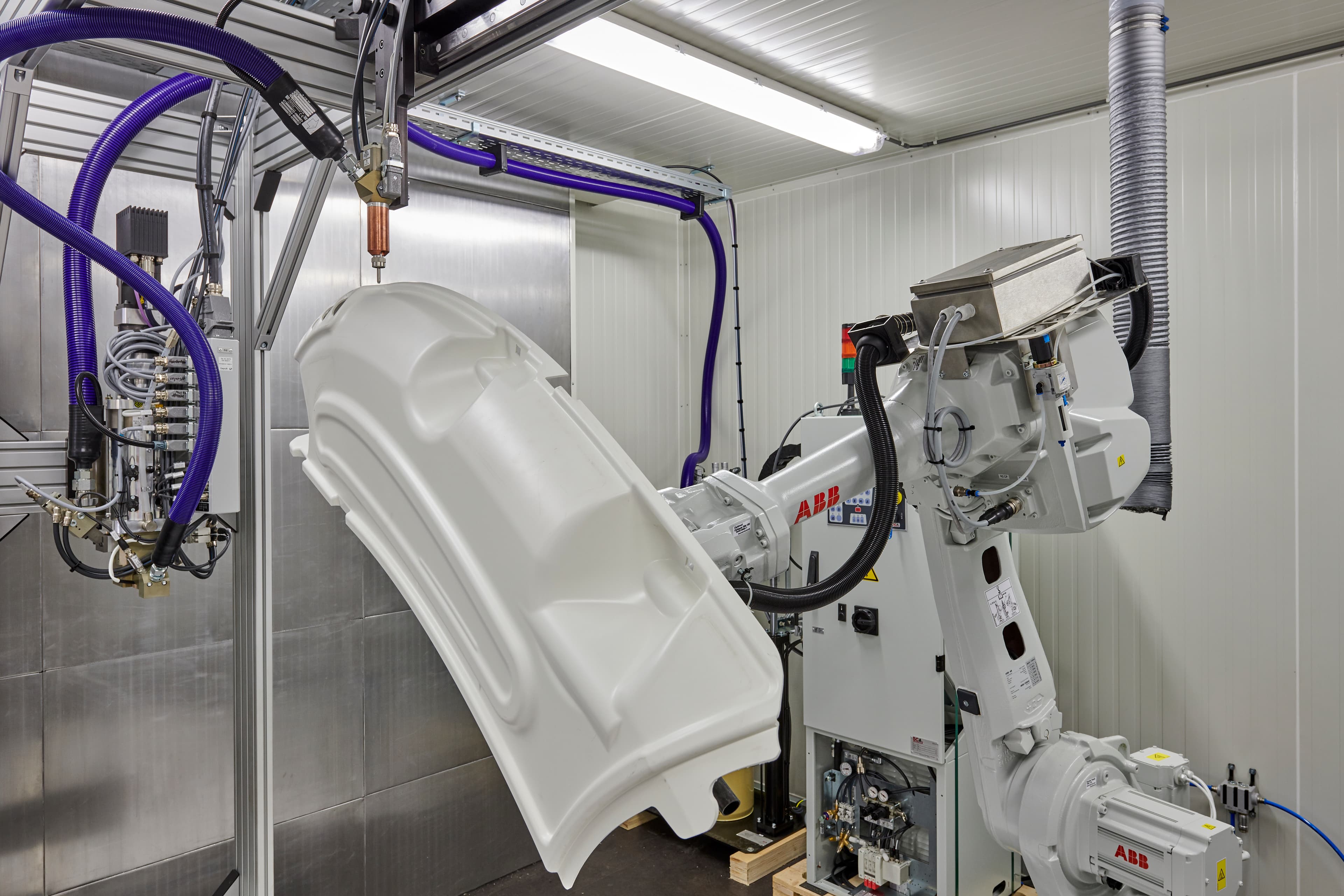
An interactive consultant was developed to support the adhesive selection based on expert knowledge and data from adhesive suppliers. The adhesive data is extracted from datasheets provided by adhesive suppliers via automatic document parsing. Constraint Decision Modeling and Notation (cDMN) allows adhesive experts to enter their knowledge in an intuitive way. Symbolic reasoning is used to select the adhesives which meet the requirements for the application. This tool was validated on several industrial relevant use cases and showed up to a factor 10 improvement in the time needed to select a suitable adhesive. The adhesive expert using the traditional approach needed about 2.5h to find a suitable adhesive, while this was reduced to about 15 min. with the use of the interactive consultant.
In addition, a tool was developed for robust, multi-objective, data-efficient adhesive joining process parameter optimization. This tool uses Design of Experiments, data-efficient Machine Learning, Surrogate-modelling and data-efficient optimization via Active Learning (Bayesian Optimisation). Also, this tool was benchmarked against the traditional approach for two industrial use cases and showed 40% reduction in time to find an optimal solution and up to 18% reduction in production cost while achieving a similar strength.[1]
[1] https://conferences.enbis.org/event/11/contributions/141/
Basic Use Case Info
Period
2019-2023
Contact
Research Groups
Flanders Make, Universiteit Gent, IDLab Gent, KULeuven DTAI and UHasselt (Research Group Logistics), VUB (DIMA)