
Digital Twin Cardio
Use Case Description
To date, decision-support systems in cardiology are either data-driven or knowledge-driven.
Data-driven approaches, such as Machine Learning (ML) techniques, can rapidly detect ‘latent’ patterns out of large, complex and heterogeneous datasets which are otherwise extremely challenging to detect by human intelligence.
Knowledge-driven approaches, such as biophysical computer models describing the physiology and physics of the heart and circulation, enable well-controlled and interpretable simulation of (personalized) cardiac function to better understand mechanisms of diseases and their treatments.
Nonetheless, both these approaches subject clinicians to large challenges. Data-driven approaches lack adequate interpretability of their outcomes, which seriously hampers adoption by clinical end users. In addition, data-driven approaches require a large amount of high-quality data to train and validate algorithms, which is complex due to the lacking availability of high-quality and complete datasets. Moreover, retraining is required when new data become available and are collected. While knowledge-driven approaches often can provide unique insights into biophysical mechanisms leading to certain phenotypes, their ability to handle heterogeneous data sources is limited and by design they do not reach beyond the scope of the knowledge included, which limits their ability to make the unknown known. Therefore, data-driven and knowledge-driven approaches on their own have hardly led to tangible and widely adopted clinical decision-support solutions in the past years.
In recent years, digital twins (DTs) found their application in various end-use industries like manufacturing, agriculture, energy and utilities, healthcare. Major role of digital twins in healthcare is to alternate the clinical process and enhance medical care through personalized insights. Furthermore, they can help doctors into designing, optimizing, and implementing different treatment plans. The development of robust model personalization techniques, based on sensitivity analysis and uncertainty quantification, can shift the application of biophysical models from generic to patient-specific simulation of cardiovascular (patho-)physiology. Pre-clinical studies have demonstrated how personalized biophysical models using conventional, non-invasive diagnostic measurements can be used to derive critical information on heart tissue properties and function, which in turn can affect cardiac disease outcome. An accurate DT can also enable simulation of pharmacological and medical device treatment strategies in the patient’s virtual heart, such as the exact determination of the positioning of leads in an ablation or design of a surgery. Hence, it will enable prediction of individual treatment outcomes.
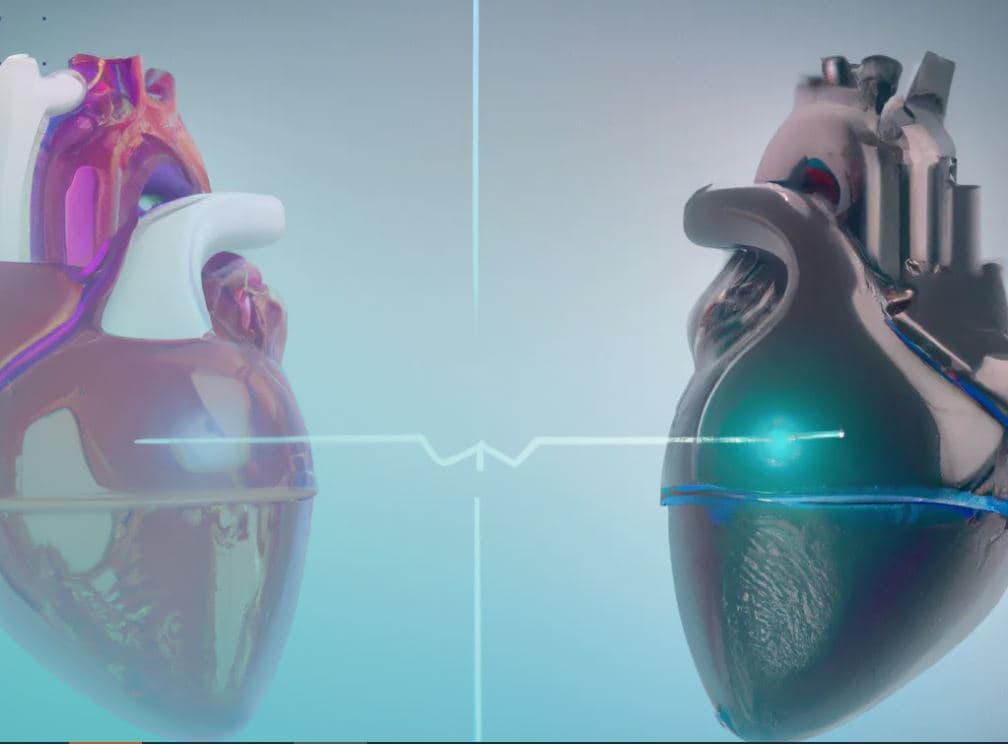
In this use case we aim to go beyond the state of the art by developing a hybrid cardiac DT. Current state of the art for in the Cardiac DT is strictly based on the use of non-dynamic (in time) cardiac images like CT or cardiac MRI. Different type of (heterogenous and multimodal) data are needed to obtain a more realistic digital twin of health organs like the heart. Our hybrid DT approach provides multiple advantages over current approaches, such as analyzing larger quantities of heterogeneous data faster than human clinicians and dynamically adapting the initial, pretrained DT. Like a clinician, the DT will improve with each new patient encountered; unlike a clinician, it will never retire. It will allow estimation of unmeasured data, avoiding the need to obtain all data on everyone. As such, patients will be better stratified according to their own pathophysiological disease spectrum and, hence, receive better personal disease-tailored treatments.
Results, Highlights & Research Outputs
Biventricular statistical shape analysis for cardiac digital twins
This paper builds a biventricular statistical shape model from high-resolution cardiac CT scans of 271 healthy individuals—including athletes—and links anatomical variability to electrophysiological and demographic features. Using a universal ventricular coordinate framework to establish lightweight shape correspondence, the authors rigorously evaluate model performance (e.g., dimensionality reduction needs and training data requirements) and release a ready-to-simulate synthetic cohort of annotated biventricular meshes. The work provides practical insights for cardiac digital twins by clarifying how normal anatomical diversity can influence ECG-related measurements and by supplying reproducible resources for future electrophysiology simulations.
Publication
[1] L. Van Santvliet, E. Zappon, M.A.F. Gsell, F. Thaler, M. Blondeel, S. Dymarkowski, G. Claessen, R. Willems, M. Urschler, B. Vandenberk, G. Plank, M. De Vos, “Integrating anatomy and electrophysiology in the healthy human heart: Insights from biventricular statistical shape analysis using universal coordinates,” Computers in Biology and Medicine, 192, 110230, 2025.
Outputs & Resources
Publications
[1] L. Van Santvliet, E. Zappon, M.A.F. Gsell, F. Thaler, M. Blondeel, S. Dymarkowski, G. Claessen, R. Willems, M. Urschler, B. Vandenberk, G. Plank, M. De Vos, “Integrating anatomy and electrophysiology in the healthy human heart: Insights from biventricular statistical shape analysis using universal coordinates,” Computers in Biology and Medicine, 192, 110230, 2025.
Awards
A team from Biomed, STADIUS (Lore Van Santvliet, Phu Nguyen, and their supervisors Prof. Maarten De Vos and Prof. Bert Vandenberk) has won this year’s George B. Moody PhysioNet Challenge, an international competition addressing open problems in cardiology. The 2025 edition focused on designing a pre-screening tool for Chagas disease using ECG signals. Chagas, a parasitic disease endemic to Latin America, remains one of the world’s major neglected tropical diseases despite its significant health burden. At the Computing in Cardiology Conference 2025 in São Paulo, Brazil, the Biomed team was awarded first prize for their algorithm, which leverages a vision transformer-based ECG foundation model to detect Chagas disease.
FIRST PLACE in George B Moody PhsioNet Challenge
Team & Contact
Contact
Maarten De Vos, KU Leuven - STADIUS; Christos Chatzichristos, KU Leuven - STADIUS
Use Case Lead(s)
Maarten De Vos, KU Leuven - STADIUS
PhD Researchers
Lore Van Santvliet
Research Groups
STADIUS, ESAT, KU Leuven
External Experts
Gernot Plank (Research Team Plank)