
Conversational XAI
Use Case Description
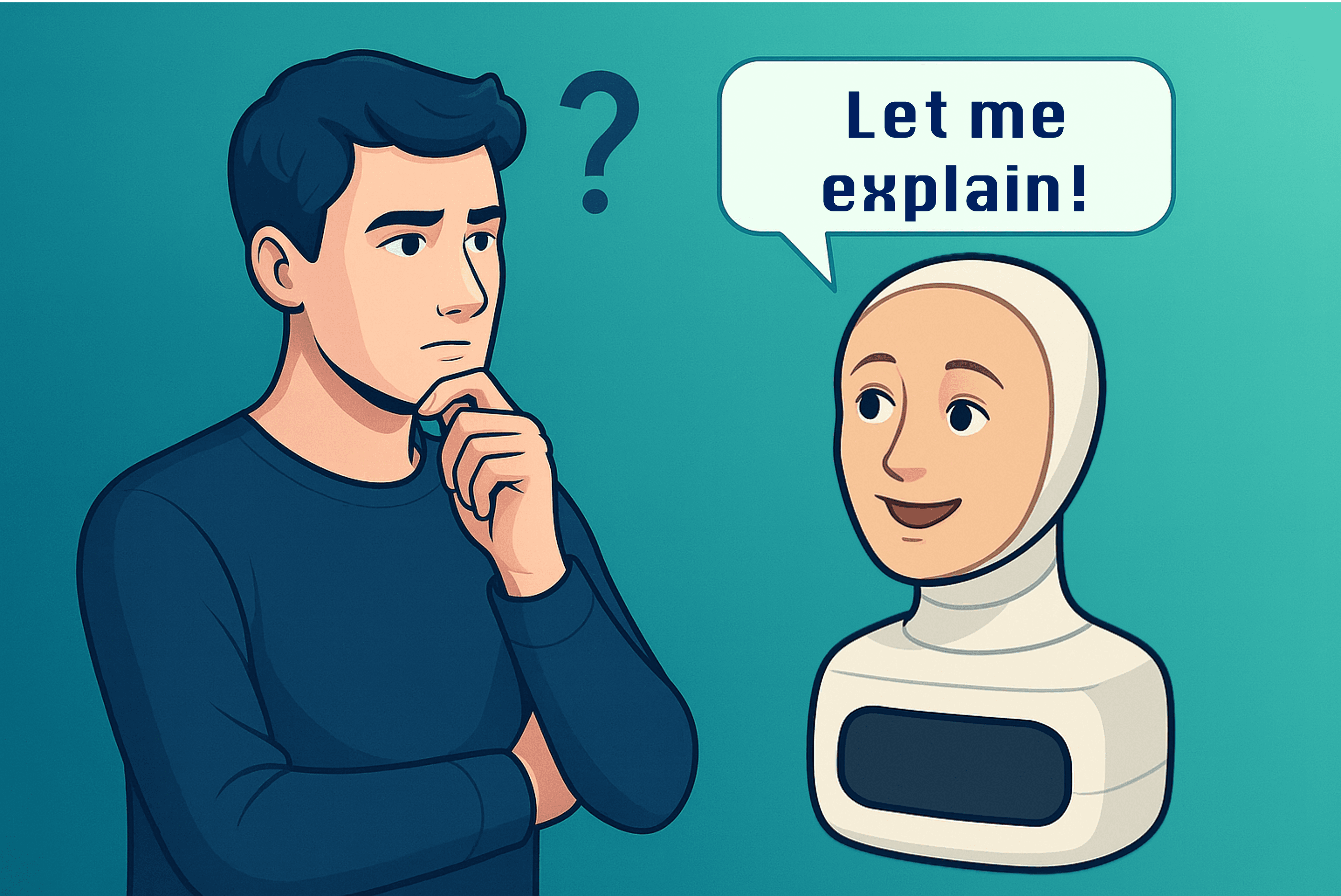
Current explainable AI systems (XAI) can provide an explanation about the model, but this generally concerns a single, static, answer. To be more flexible and explain a model decision that might include background information in a personalized manner, we are developing a dynamic, interactive, explanation system in the form of a multi-turn conversational agent. Such an interactive way of explanation will provide actionable insights and ensure user trust. Additionally, trust is increased when an AI model has very accurate predictions and if an explanatory system of the model predictions is transparent about the confidence of its predictions: users are allowed to know if a prediction and thus its explanation has a low chance of being correct.
In this use case, we focus on valorisation in concrete contexts. We are therefore working on multiple demos that will be directly adopted by end users, one of them being a training tool for medical students to train and get feedback on their skills in communication and diagnosis.
Results, Highlights, & Research Outputs
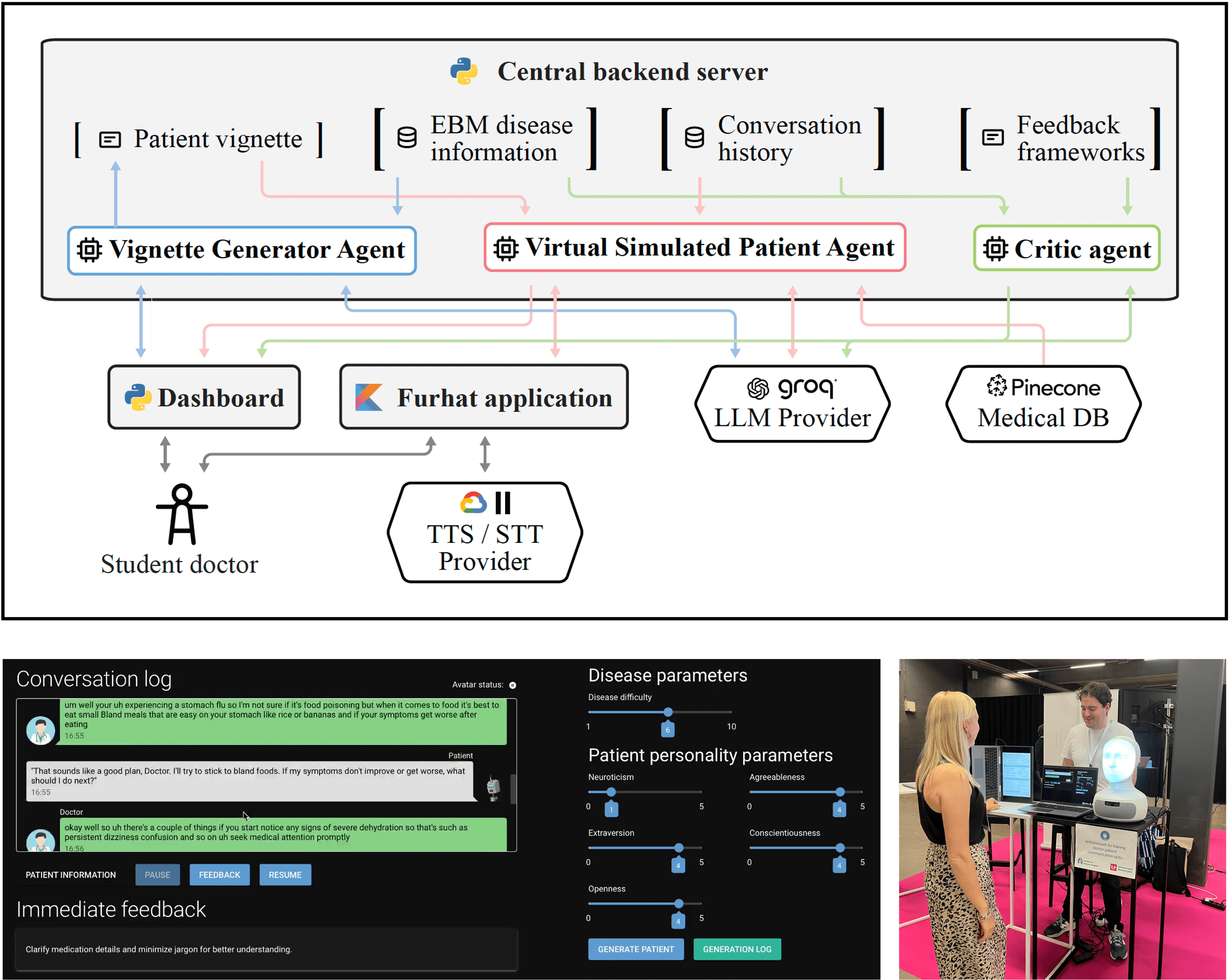
Agentic explainable AI framework for training doctor-patient communication skills
Effective doctor-patient communication is a central function in establishing a therapeutic relationship between the two, and the delivery of high-quality health care. A doctor's communication and interpersonal skills includes the ability to gather information for an accurate diagnosis, provide appropriate counselling, give therapeutic instructions, and build caring relationships with patients. To develop these skills and knowledge, medical training often involves working with role-playing persons (simulated patients, SP), which provides students an opportunity to practise in realistic scenarios within a controlled environment. However, training and hiring qualified SPs is a costly procedure, which limits their availability for the medical students. Large Language Models (LLMs), with their capabilities in conversation, role-playing and explanation, provide a feasible option for the development and implementation of Virtual Simulated Patients (VSP).
In this demo we present an agentic explainable AI framework to facilitate communication training for medical students. Leveraging LLM capabilities, the framework provides a customizable setting to conduct diagnostic conversations with virtual simulated patients, evaluate the conversation according to standard criteria, and explain the multi-faceted evaluation by discussing the strengths and weaknesses of the student communication and interpersonal skills. To enhance the simulated experience, a Furhat robotic head with back-projected face is used as the VSP, which adds to the expressive potential of our application.
Outputs & Resources
Journal/Conference Publications
Yuqing Yang, Boris Joukovsky, José Oramas Mogrovejo, Tinne Tuytelaars, Nikos Deligiannis. (2024). SNIPPET: A Framework for Subjective Evaluation of Visual Explanations Applied to DeepFake Detection. ACM Transactions on Multimedia Computing, Communications and Applications, 20(8),1-29. https://doi.org/10.1145/3665248
David Martens, Camille Dams, James Hinns, Mark Vergouwen. (2023). Tell me a story! Narrative-driven XAI with large language models. ArXiv:2309.17057. https://doi.org/10.48550/arXiv.2309.17057
Demonstrators / applications
Agentic explainable AI framework for training doctor-patient communication skills, presented as a virtual simulated patient demo for medical student communication training.
Team & Contact
Contact
Use Case Lead: Walter Daelemans (CLiPS - UAntwerpen)
Use Case Lead(s)
Walter Daelemans, CLiPS - UAntwerpen
Postdoctoral Researchers
Jens Van Nooten, CLiPS - UAntwerpen
PhD Researchers
Victor De Marez, CLiPS - UAntwerpen; Thomas Dooms, IDLab - UAntwerpen; James Hinns, ADM - UAntwerpen
Research Groups
CLiPS - UAntwerpen
IDLab - UAntwerpen
ADM - UAntwerpen
External Experts
Centre for General Practice - UAntwerpen